Saturday, March 3, 2012

The anime blog "Larva Cartoons"

Popular Anime Cartoon Larva
larva cartoon
Blog The cartoon Larva
larva cartoon
Blog The cartoon Larva
larva cartoon
Blog The cartoon Larva
larva cartoon
Blog The cartoon Larva 2012
larva cartoon
Blog The cartoon Larva
larva cartoon
Blog The cartoon Larva
larva cartoon
Blog The cartoon Larva
larva cartoon
Blog The cartoon Larva
larva cartoon
Blog The cartoon Larva

Monday, February 13, 2012

Simple Mind Control Techniques of Hypnosis

The following paragraphs summarize the work of hypnosis mind control experts who are completely familiar with all the aspects of hypnosis mind control. Heed their advice to avoid any hypnosis mind control surprises.

Those of you not familiar with the latest on hypnosis mind control now have at least a basic understanding. But there's more to come.

Mind Control Hypnosis

Techniques for Control Hypnosis Mind Tricks are not just glam magicians and presenters. This is very useful medical treatments that help many people suffering from various addictions like alcohol, tobacco, etc. to get rid of it. Mind Control Hypnosis also help people to overcome their bad habits and forget some of their physiological fear.

Hypnosis mind control has been used in patients suffering from immense pain due to cancer, accidents and burn victims to control pain and reduce the intensity of discomfort. It was found from a study conducted by the International Journal of Clinical and Experimental Hypnosis techniques such as hypnosis mind control has been shown to reduce pain sensation by 75% of patients treated with hypnosis.

Psychologists are also trying weight loss hypnosis to help people overcome their cravings and lose weight easily. Pregnant women also undergo hypnosis to help them overcome the pain of labor and deliver the baby with ease. Some medical applications of medical technology in mind control, but there are techniques speculative uses mind control as well.

Hypnosis mind control used by many qualified hypnotic to get people to do something that not even realize that they do. That person becomes a zombie right after all the votes he controls. There are many stories of hypnotic mind control found in newspapers, magazines and the Internet all that people are using hypnosis as a tool to make someone sign the paper to a property or money in your hand makes money from the bank, without much resistance or kidnappers hypnotize children and take them. There are also serious stories where they have been sexually abused under hypnosis or even kill someone.

This shows that hypnosis mind control is a double edged sword which can be useful and dangerous at the same time. But you can use the techniques of hypnosis mind control in your daily life to get what you want? Can you convince your boss to let you go home early every day or get your teenage son to concentrate on studies. Well, the art of persuasion, also known as techniques mind control hypnosis is widely used to go out with small things in life. Let's see some simple techniques mind control hypnosis that could be useful in our daily lives.

Simple Mind Control Techniques of Hypnosis

You do hypnosis every day without even realizing it. This hypnosis occurs when you love someone, you tend to follow them. So if your best friend tells him to go out for a movie when they sit down to study for tests the next day, follow your best friend to the movies without much delay. If someone loves you, you can follow all wimps and fantasies for your pleasure. That way you will notice that the number of times you said yes to anything is when someone you love or are you attracted asked a favor.

But what about someone who is a stranger as a potential supplier or customer? Well, you must follow the technique of mind control hypnosis reflects people's behavior. When you report the behavior of someone to get your way? The answer lies in taking a closer look at the person and repeated actions or words in the person uses. You must use the same words or actions, while the interaction with that person. The person will soon realize the similarities begin and the person will develop a relationship with you.

Hypnosis Mind Control Stories

The best way to control a hypnosis through the use of stories mind control hypnosis. It may be wondering how a story can be used to control a person? You may have noticed that people are absorbed while reading an interesting story or watch movies and try to implement the character he created the biggest impact on their minds. So some short short stories about your daily conversation, to help you control the mind of another person. You can also use negative phrases to make a person do something that you want. It's like reverse psychology. Tell the person who does not need to do right now and the person what you want now. You can read more about how to hypnotize.

It is very important to use your words carefully when people think a picture of the action when you ask them. When you ask the person not to let the matter drop the glass, he imagines the case of glass and maybe drop falls. But if you ask the person to safely transport the case of glass, he probably will just be more careful.

These are just some of the techniques of hypnosis mind control that you can try. Hypnotism is an art that is learned, after years of practice. When you make a person go into a trance state, is very important to know how to make the person do without negative consequences. Many use a hypnotic or clap or click on a word to make a person suffering from a trance or deep sleep. You play with subconscious and make it closer to the conscious mind. You never know what the person has stored in his subconscious mind, which may prove dangerous to you and the person under hypnosis. So be very careful before you the techniques of hypnosis mind control.

That's how things stand right now. Keep in mind that any subject can change over time, so be sure you keep up with the latest news.

Characters of emotion and how to control

Have you ever wondered what exactly is up with emotion character control? This informative report can give you an insight into everything you've ever wanted to know about emotion character control.


It's really a good idea to probe a little deeper into the subject of emotion character control. What you learn may give you the confidence you need to venture into new areas.

There is one type of movement is more sensitive than other due to its high brightness, and it is anger. It also occurs more frequently and are subject to more intensive. Regarding duration, may differ considerably for each type of emotion. Thus, the fear lasts a few seconds to a few hours maximum, and it can certainly be that it is linked to a very precise and unexpected stimulus, causing reactions necessarily fit such as running, the presentation, aversion, tranquility, which can make it exciting will fade very quickly.

Anger may be from several minutes to several hours. Since he is very attached to the person or situation that caused the emotional experience decreases when the person becomes more or adapted as the situation gradually changed, especially if the person is angry more under point resulted in his / her anger. Joy can last from one hour to day, depending on the importance of social context. Finally, the pain may be from one to several days, which often requires a period of grief and adaptation to the new relational situation.

Emotional control has some effect. There is an implicit understanding of the history of emotions. First, emotions are mixed, follow the reactions and these reactions since the inspection. This concept can really take a theoretical simplification, which leads to ambiguity, because the sense regulation may occur at different levels: the individual level (individual homeostasis) and social (social homeostasis). Some reactions that expressive reactions that flow as described above, ie, screams, laughter and gestures play an important role in homeostasis individual. They are seen as necessary and allows a state of charitable relief. In these cases, the reaction is as controlling the emotional state.

On the other hand, it is true that the emotional public events to provide certain conventionality and also the homeostasis or social inter-individual. The two elements are individual and social control highly correlated and the reaction surface is the result of the combination of the spontaneous tendency expressed by its control.

Feelings and emotions are so closely linked to the motivation that most psychologists consider them together. They considered the behavior and trends and values ​​seems to have manifested his side. This does not mean they have identical functions. Transactions between the trends and values ​​are governed by social norms and law-abiding ethics. Transactions between feelings and emotions are controlled by heritable acquired our health and inner happiness. They depend on the harmonious development of our personality, in terms of mental health and promoted the art and literature.

Our social action and productive work we try to fulfill our duty. Inner peace in our mind is designed to confirm our identity. Therefore, our emotional state of mind not only the feelings and emotions, which is on the inside of the values ​​and trends. They even have their own rules, represented by feelings of joy, strength and weakness, attraction or repulsion towards love and hate. As Carl Jung said, the value judgments in our lives. But their score is not the kingdom of truth, which can be solved with the help of cognitive logic nor belong to the field of science, justice, beauty, goodness, and so on. But they belong to health and happiness, and perhaps beauty and can be treated with typical emotional logic, art and literature.

Of course, it's impossible to put everything about emotion character control into just one article. But you can't deny that you've just added to your understanding about emotion character control, and that's time well spent.

Saturday, December 31, 2011

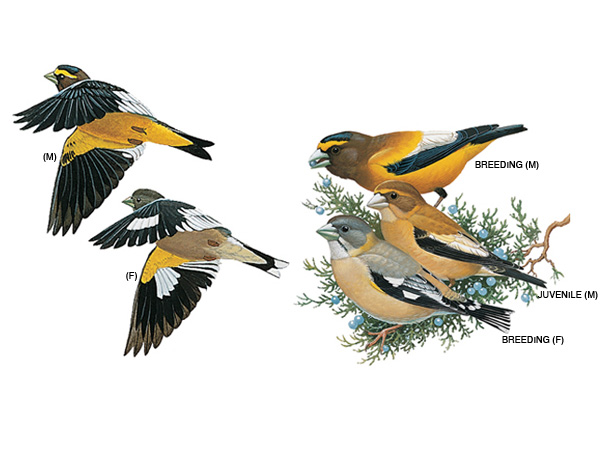
Evening Grosbeak Facts, Pictures, Information

This deafening finch is relatively discreet during the reproduction season, yet types huge, gregarious flocks during wintertime months season. It is found during summer mainly in coniferous jungles across boreal North america and in the Difficult Mountains; its winter season actions are both irregular and irruptive, likely due to varying food. Polytypic. Length 8" (20 cm).

Identification A huge, stocky, strongly designed finch with a very short longest tail and heavy expenses. Male: individually designed, your human is a rich older darkish,  becoming dark darkish on head and dark-colored on title. Both the temple and eye brows are bright older yellow-colored. The longest tail and wings are black; the latter has distinct genuine bright secondaries and tertials. The light yellow green expenses is huge for a finch. Female: your human is gray darkish above, buffier on underparts, receiver, and rump. The neck is almost white and has a unique black malar red stripe. Like the using its, the wings are dark-colored, but the secondaries are not as genuine bright and have a black border, and a bright base to the primaries types a bright spot visible in a collapsed side. There are huge bright spots at the end of the longest tail. The side and longest tail design are obvious in trip. Juvenile: the using its looks like an mature using its, only your human is a duller consistent darkish and the eye brows are a unexciting yellow-colored. The women looks like the mature women.

Geographic Difference Three subspecies in South America. The lower vespertinus tend to have reduced bills and larger yellow-colored eye brows than the north western montanus. American brooksi is also long charged. Flight calls different.

Similar Types Only the hawfinch has a identical design.

Voice Call: trip calls of lower wildlife a ringing clee-ip or peer; western wildlife give a clear, whistled tew, just like the olive warbler but higher. Song: hardly ever heard and badly described.

Status and Submission Breeding: coniferous woodlands and mixed wood, mainly in mountain ranges in the west. Winter: Sometimes common at lower levels and south of reproduction range. Often seen in flocks at seed bird feeders. Unusual to recreational in lower states. Vagrant: recreational in spring northern to Ak.

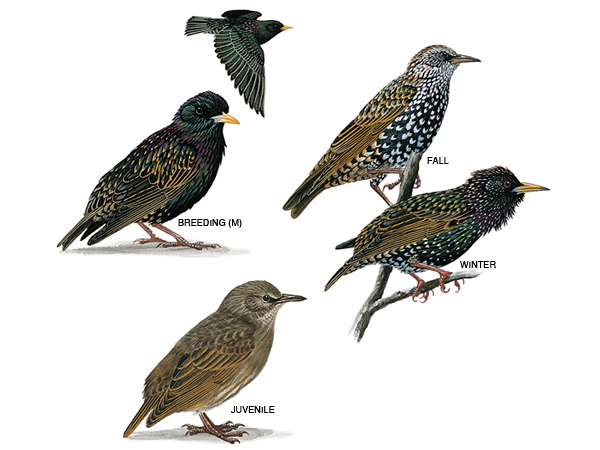
European Starling Facts, Pictures, Information

Wide-spread and plentiful in much of South The united states, the presented American starling is perhaps and problematically the most successful chicken on there are. Often recognized as daring, this chicken is actually pretty careful and can be challenging to strategy. Poly­typic. Length 8.7" (22 cm).

Identification Stocky and short tailed, often seen prancing about grass and vehicle lots. Trip account distinctive: buzzy in continual flight, wings look pie in more relaxing flight. Flying, wings appear clear. Adult: one molt per year, but fresh slip people look very different from summer wildlife. On fresh molted wildlife, dark-colored plumage has white areas all over; by winter weather, areas start to disappear; and by may, the wildlife are shiny dark-colored all over, with strong suffusions of iridescent lilac, vegetables, and ambers. Expenses usually grey in slip and yellow-colored by winter weather, but this personality deviates with diet. Male: with excellent look, please take be aware blue-based bill. Female: with excellent look, please take be aware pink-based bill, paler face. Juvenile: distinctive; black gray-brown feathering all over. Birds begin a complete molt into adultlike plumage soon after fledging, and temporarily display a stunning variety of juvenal and mature down.

Geographic Difference Seemingly, only the nominate subspecies happens here; 12 other subspecies in Old World.

Similar Types Framework unique, but sometimes puzzled with un­related blackbirds, which often co-occur with starlings in large flocks. Blackbirds more trim bodied, with longer tails and less-pointy wings. Trip account more like a waxwing’s or a meadowlark’s than blackbird’s.

Voice Highly assorted. Call: generally heard calls include drawn-out, hissing sssssheeeer and whistled wheeeeoooo. Song: complicated, extended (>1 min. long), with complicated rattling and whirring components, and overall wheezy quality; contact paperwork may be included into tune. Mimics other species, especially those with whistled paperwork (e.g., killdeer, southern wood-pewee).

Status and Submission Abundant. Breeding: needs natural or man-made space. Often evicts natural species from home gaps. Migration: withdraws in winter season from south part of variety. Winter: gregarious, with most significant levels around places, feedlots. Vagrant: still broadening variety in the The, and out-of-range individuals (e.g., on western Aleutians) are challenging to review.

Population Efficiently presented in Middle Playground, New You are able to, 1890–91; across place by overdue 40s. Inhabitants currently surpasses 200 thousand.

Eurasian Collared-Dove Facts, Pictures, Information

A pretty latest introduction to South The u. s., this huge light dove can now be found across the U. s. Declares. It flap on wide wings, and often soars temporarily, with wings prolonged a little bit above horizontally as it apparently drifts down to a getting. Polytypic (2 ssp.; nominate in South America). Duration 12.5" (32 cm).

Identification A huge, light gray-buff dove with a dark-colored receiver, substantially bigger than the grieving dove. There is also a natural cream-colored different, and this types is known to hybridize with the ringed turtle-dove, so plumage difference will happen. The longest tail is pretty long and blunt-ended. Mature male: the head is an unblemished, light buff-gray, while the upperparts are a black buff-brown, tinged gray; a apparent dark-colored receiver can be seen on the back fretboard. The primaries are substantially black than the relax of the side, showing blackish; the secondaries are grey and comparison with the blackish primaries and the darkish side coverts in trip. The undersides of the wings are light. The underparts are a paler buff-gray joining into grey on the undertail coverts. A black grey longest tail has apparent dark-colored at the platform when seen from below; the dark-colored expands beyond the undertail coverts. This dark-colored contains the external internets of the external rectrices, and the longest tail has a wide, light buff-gray terminal group. A crimson darkish eye region small grayish-white orbital skin. The blackish expenses has grey at the platform, and you are unexciting crimson. Mature female: identical. Juvenile: paler; strong edges on down of the upperparts; dark-colored receiver hidden or losing.

Similar Species The ringed turtle-dove is lesser, shorter-tailed, and substantially paler; it has far less comparison between the trip down and the relax of the wing; undertail coverts are bright with dark-colored at the platform of the longest tail more limited, and the external internets of the external rectrices bright. In addition, the contact is different.

Voice Call: an ordinary recurring, trisyllabic kuk-koooo-kook, a little bit nose, with the focus on the center note; also a harder kwurrr sometimes given in trip.

Status and Submission A Eurasian types presented to the Bahamas, which propagate to California in 4 decades ago. It was easily founded there, then propagate westward in the Nineties, and it has now attained the Hawaiian seacoast. The inhabitants is estimated to increase and propagate northward into North america. Its westward development follows a identical development from its unique variety in Japan all the way to the Chesapeake bay of The european union. Breeding: home is a slight development of branches placed in plants, particularly palms, but sometimes on artificial structures; normally 2 bright egg, sometimes more; 3 to 6 broods a year from the same home. Migration: not a migrant in the true sensation, in that people are not known to come back to reproduction or wintering argument. But people move great ranges, thus empowering the types to easily develop its variety across South The u. s..

Population The 2004–2005 Audubon Xmas Chicken Count number revealed extraordinary proof of the Eurasian collared-dove’s intense development across there are in a one fourth millennium. The types was outlined in 32 states and 4 North america areas (British The philipines, Alberta, Saskatchewan, and Ontario). Small statistics present in some areas may have runaway or been published from captivity by dove collie breeders, but most wildlife are thought to characterize truly outrageous colonizers.

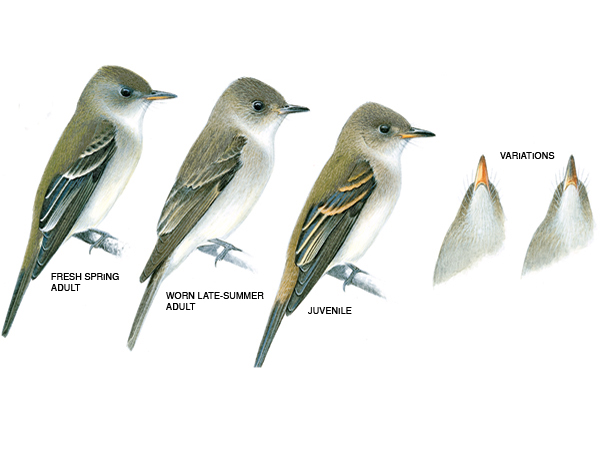
Eastern Wood-Pewee Facts, Pictures, Information

This types is incredibly just like the american wood-pewee and is best determined by variety and express. Vagrants should be determined with excellent care and preferably documented with files of vocalizations, photos, or video. Monotypic. Length 6.3" (16 cm).

Identification Adult: plumage generally dark-colored gray olive above with unexciting white throat, dark breast; white or light yellow underparts. Bill has dark-colored higher mandible and unexciting orange cheaper mandible, usually with a limited dark-colored tip. Long wings extend one-third of the way down the longest tail. Very just like the american wood-pewee, but spring and beginning summer time people are usually more olive with less substantial chest band (often produce interested appearance) and a light smooth grey nape that differences slightly. The side cafes are often larger and more contrasty. Parents molt on the wintering grounds, and used summer time wildlife (and slip wildlife in Southern America) are essentially identical to the american wood-pewee in look. Juvenile: during slip divided from used people by fresh plumage, buff-gray side cafes, and darkish wash to the upperparts. Many have more substantial dark-colored colour to cheaper mandible and appear more like the american wood-pewee. On average, the side cafes stand out more than on the american wood-pewee, with the higher and cheaper side cafes the same color and size (unlike the american, which usually has a less noticeable higher side bar).

Similar Species Extremely just like the american wood-pewee and best divided by variety and express. Most often confused with the willow and the alder flycatchers. Please take be aware the willow’s and alder’s relatively short primary projection (barely reaching beyond base of tail), smaller size, bright­er side cafes, and tendency to wag its longest tail. wood-pewees also look from higher prominent perches, to which they repeatedly come back. Compare with the greater pewee, the olive-­sided flycatcher, and the lower phoebe.

Voice Call: a loud, dry chip plit and clear, whistled, rising pawee notes; often given together: plit pawee. Song: a clear, slow plaintive pee-a-wee; second take be aware is lower; often alternates with a downslurred pee-yuu.

Status and Submission Common. Breeding: variety of do environments. Migration: primarily circum-Gulf migrant. Most come back mid-April (southern Texas) to mid-May (Great Lakes); remain later than the american, regularly into beginning July. Winter: mostly northern Southern The u. s.. No valid United States winter weather records. Vagrant: casual in West to american Tx, american Ok, american Kansas, lower Colorado, southeastern Wy, american Nebraska, american Southern Dakota, american Southern Dakota, lower Mt, south-central Saskatchewan, New Mexico, lower Nevada, lower Arizona, southeastern Or, and California (9 recs., mostly slip singing birds).

Population Reproduction Bird Survey shows widespread diminishes, particularly in middle Southern The u. s., but types not classified as threatened, vulnerable, or of special concern. Causes for decline unknown.

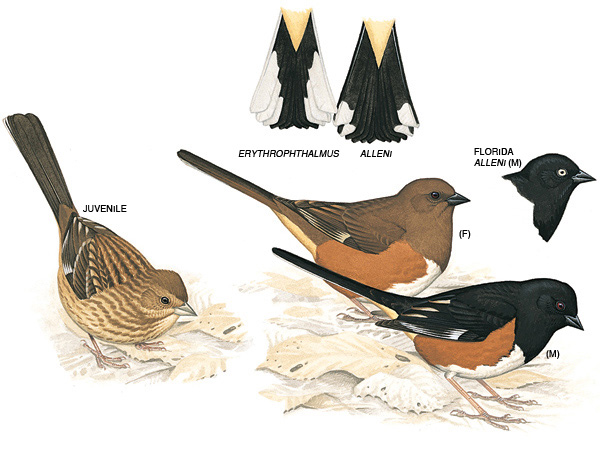
Eastern Towhee Facts, Pictures, Information

The southern acts in the same way to the identified towhee. Duration 7.5" (19 cm).

Identification Obvious bright crevices on longest tail and bright spot at platform of pri­maries. Male: dark-colored upperparts, hood; rufous factors, bright underparts. Female: dark-colored places changed by darkish. Juvenile: darkish lines below.

Geographic Difference Four subspecies present vulnerable to reasonable variation. Bird’s overall dimension and the level of bright in its wings and longest tail decrease from the south part of the variety to the Beach Coast; expenses, leg, and base styles improve. The large nominate subspecies (breeds in North) has red irides, most substantial bright in longest tail. Lesser alleni of California paler and duller, with straw-colored irides. Advanced lower subspecies canaster (west) and rileyi (east) have variably red to straw-colored irides.

Similar Types See identified towhee.

Voice Call: emphatic, upslurred chewink; in alleni, a better, even-pitched or upslurred swee. Also a high-pitched szeeueet, losing in center (poss. trip note). Various snacks when irritated. Song: noisy calling consume your tea, sometimes with extra paperwork at starting or reduced to consume tea.

Status and Submission Not unusual. Breeding: partially to second development with heavy bushes and substantial foliage cover, seaside detail or mud dune side, and older lower pinelands. Migration: person, except for partly migratory nominate subspecies. Migration mainly July and Goal. Vagrant: recreational to Co and New South america. Random to Az, California, and The european union.

Population Latest diminishes, especially in South, are due to urbanization. Southern numbers more constant.

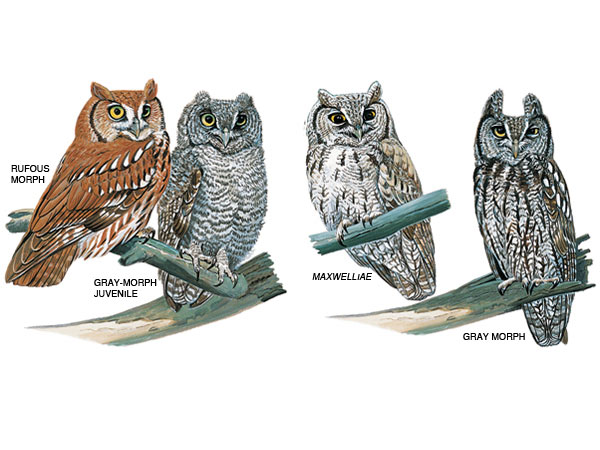
Eastern Screech-Owl Facts, Pictures, Information

In southern forest and surrounding suburbs, this little, owl is often the most typical chicken predator, appearing from its home or roost pit in the evening to hawk bugs or search other little food, such as songbirds and mice. Its whinnying and trilling audio are well known, but its vocalizations also include rasps, barks, hoots, chuckles, and screeches. Its tracking is mostly night but often crepuscular and occasion­ally diurnal; it nests in old wood­pecker gaps or natural shrub space and easily uses effectively scaled and located home containers. Courtship happens overdue The month of january through mid-March, with the using its marketing its existence and also potential home sites. Egg are installed beginning in early March; fledging starts mid- to overdue May. The child is still reliant on mother and father for another 8 to 10 weeks. The southern was formerly categorized with the american as 1 species; wide range separating is not yet completely known. Polytypic (5–6 ssp.; all in Southern America). Duration 8.5" (22 cm); wingspan 21" (53 cm).

Identification Adult: small; yellow-colored eyes; expenses yellow-green at the platform with a paler tip. Ear tufts are popular if raised; when compressed the chicken has a round-headed look. Cosmetic drive is plainly rimmed black, especially on the lower half. Underparts are noted by directory lines surpassed by extensively moving black cafes that are nearly as huge as the lines. Scapulars have blackish surrounded bright external internets, growing a line of bright areas across the neck. Toes are proportionately huge. Is situated rufous and grey morphs as well as advanced darkish plum­ages; plumages are as well, but the women is bigger. Marks on underparts are less specific on rufous change wildlife. Juvenile: just like mature in colour, but indistinctly prohibited light and black on head, layer, and underparts; ear tufts not yet completely designed.

Geographic Difference Bodily proportions and concentration of markings differ clinally: lesser and dark in the southern region and china, bigger and brighter in the northern and western side. Coloring change submission is more complicated. In most places advanced darkish wildlife prepare less than 10 percent of the population; but in California, grey, rufous, and darkish wildlife are obviously about likewise typical. The rufous change becomes more typical in the Southern and outnumbers the grey change in some places. Normally only grey change wildlife are discovered on the Great Flatlands and in most southern Tx. The huge north western side subspecies max­welliae is the palest and most faintly noted.

Similar Types The american screech-owl’s expenses is blackish or black grey at the platform, but gray-plumaged individuals are otherwise nearly similar in look and routines to the Eastern grey change wildlife. Where their varies overlap, the two species are best determined by express.

Voice The territorial immunity tune is a clearly climbing down and quavering trill up to 3 mere a few moments long, similar to a horse’s whinny. The contact tune (3–6 secs.) is 1 low-pitched quavering trill of about 14 paperwork per second that may increase or fall a little bit at the end. The using its utters this sound when marketing a home site, relationship, and coming at the home with meals. Both genders perform each song; the female’s express is a little bit higher delivered. Both women (during courtship) and juveniles beg for meals with a tough, grating rasp, usually decreasing in message.

Status and Syndication Common. Vary now overlaps that of the american screech-owl in southern Co, along the Cimarron Stream, in excessive free airline Might, and in Tx china of the Pecos Stream to near San Angelo. Both species are discovered at Big Move Nationwide Playground in Tx, where the american is unusual and the southern is rare; compounds are known from there and from southern Co. Year-round: person in a a wide range of tree-dominated habitats: woodlots, jungles, river valleys, swamps, orchards, parks, suv backyards below about 4,500 feet. May make local or altitudinal actions in serious winter seasons or during meals shortages.

Population Generally thought to be constant.

Eastern Phoebe Facts, Pictures, Information

The lower phoebe is a rather unexciting phoebe found in the china and across middle North america. It frequently nests under eaves, connects, or other overhangs on human-made components. The lower phoebe is most quickly divided from other unexciting flycatchers by its feature addiction of dropping its longest tail in a rounded movement. Monotypic. Duration 4.5" (11 cm).

Identification The lower is darkish grey above; pitch-dark on head, wings, and longest tail. Its underparts are mostly white, with light olive rinse on factors and chest. Fresh slip mature easterns are laundered with yellow-colored, especially on the waist. Molt happens on the reproduction argument. Juvenile: plumage is temporarily kept and just like the adult’s but browner, with 2 sugar-cinnamon side cafes and sugar-cinnamon tips to the down on the upperparts.

Similar Types Pewees are dark and they have longer wings, but they are most quickly divided from phoebes by the phoebes’ unique longest tail wagging. Empidonax flycatchers have eye happens to be and side cafes, which are missing in the lower phoebe. An empidonax flycatcher pictures its longest tail upward; only the grey flycatcher falls its longest tail downwards.

Voice Call: standard contact is a razor-sharp tsip, just like the black phoebe’s. Song: unique, tough whistled tune involves 2 phrases: schree-dip followed by a decreasing schree-brrr; sometimes put together one after the other.

Status and Submission Common. Breeding: jungles, farmlands, parks and suburbs; often near water. Migration: collie breeders come back to the Area mid-March–late May and get away from overdue September–early July. Unusual in slip and winter weather to Florida. Vagrant: recreational western side of the Difficult Mountain ranges and northwestern Great Flatlands. Random to lower Yukon and south Alaska; vision record for Britain.

Population Seemingly constant.

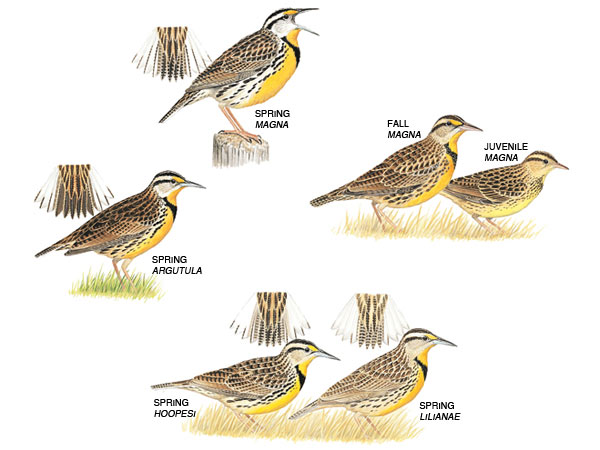
Eastern Meadowlark Facts, Pictures, Information

The lovely, whistled tune betrays the presence of this ground-loving blackbird. Polytypic. Length 9.5" (24 cm).

Identification Rotund, stocky medium-size icterid with a long expenses, short longest tail, strong feet, and indicated longest tail down. Summer adult: cryptically designed above; bright yellow-colored below with daring dark-colored V on chest. Title darkish with bright average crown red stripe, dark-colored postocular red stripe, otherwise yellow-colored supralores stand out on the paler face. Heated strong flanks crisply streaked darkish. Back down surrounded bright, but have complicated design of strong, and dark darkish in centers. Fresh wildlife have a scaly look due to complete light fringing of down. Coverts warm darkish with dark-colored cafes that expand and meet next dark-colored cafes at the feather base. In the same way, central longest tail down show confluent dark-colored cafes along base. External 3 longest tail down mostly or entirely bright. Bill grey with dark culmen and tip, feet unexciting lilac, eyes dark-colored. Winter weather adult: Pale tips impair the dark-colored V on chest. A little bit more buffy yellow-colored underparts; scaly upperparts. Juvenile: just like winter mature, but paler yellow-colored below and chest V streaked.

Geographic Difference Fifteen subspecies recognized, 4 in South America. The most specific, and perhaps a good types, is lilianae, the “Lilian’s.” Found in the leave Free airline, it is smaller, has longer wings and feet, and is usually paler than typical easterns. It reveals light gray-brown plumage, like a american meadowlark, and individual and small cafes on longest tail and greater coverts. It has considerable bright on the longest tail, with the outer 3 rectrices entirely bright, and the next in with considerable bright. Although the calls are the same as for the lower, the tune of the “Lilian’s” is more complicated and lower in message, somewhat similar to a american.

Similar Species The american meadow­lark is very identical. The contact of the lower is diagnostic; the higher-pitched talk is as opposed to the dry shake of a american. The lower does not have yellow-colored on the malar and is usually dark than a american, displaying a loaded darkish overall color. The lower reveals mostly bright outer 3 longest tail down, bright is even more considerable on the “Lilian’s” meadowlark. The “Lilian’s” reveals the light plumage and specific, individual unless as in american, but it does not have streaking on the light, thus displaying a lot of comparison with the dark-colored eye line and crown, and white supercilium and cheekbones.

Voice Call: a buzzy dzert; also a talk given by both genders, greater delivered than shake of the american meadowlark. Flight note: a lovely whistled weeet. Song: three to 5 or more noisy, moving, climbing down whistles lasting approximately 1.5 seconds, tsweee-tsweee-tsweeeooo.

Status and Submission Common. Breeding: grasslands and old field habitats; where sympatric with american, takes moister grassland and shrubby edge environments. “Lilian’s” in leave grassland. Migration: diurnal migrant; south wildlife move >620 distance, lower ones person. Spring introduction reliant on snow liquefy, usually March–April, fall actions peak September–October. Winter: farmland, grasslands, and rangelands. Vagrant: recreational to Newfoundland, South Dakota, Co, north western Az, and Manitoba.

Population General diminishes have been discovered from the Sixties to the Nineties due to environment loss.

Eastern Kingbird Facts, Pictures, Information

This small, white-bellied, obvious types has the most significant submission of any South American kingbird. Mono­t­ypic. Length 7.8–9.2" (20–23 cm).

Identification Adult: dark-colored go combinations to standing grey back; middle title spot deviates from red to yellow-colored. Dark grey wings; small bright edgings to upperwing coverts and secondaries. Black longest tail with obvious bright terminal group. Light underparts; grey areas on factors of chest, paler grey rinse across middle of chest. Substantially grey underwing coverts. Juvenile: usually identical but paler gray darkish upperparts comparison with blackish mask; bright longest tail guidelines smaller.

Similar Species People in reasonably fresh plumage are essentially unique. Immatures and used parents, both of which can have somewhat paler or browner upperparts and reduced bright longest tail guidelines, can be superficially just like grey or thick-billeds but would still be overall lesser and lesser charged. Premature fork-taileds are also superficially identical but have more head-back comparison, a longer longest tail, and a white center of chest.

Voice Call: Single or wide range of zeer, dzeet, or trilled paperwork. Beginning song: a sequence of complicated paperwork and trills, which are recurring over and over, t’t’tzeer, t’t’tzeer, t’tzeetzeetzee.

Status and Syndication Common. Breeding: open areas in a wide range of environments that have trees and shrubs or bushes for home sites. Migration: diurnal migrant, often seen in reduce flocks; at least some trans-Gulf activity. In early spring, mid-March–mid-June, mountains mid-April–mid-May; in western side mid-May-June. In fall, overdue July–mid-October, mountains mid-August–early July.; mostly gone by end of July, unusual after beginning July. Winter: Lower The united states, mainly american Amazonia (eastern Ecuador and Peru, american Brazil), but also satisfied as far southern area and china as south Chile, Argentina, Paraguay, southern Lower america, and Guyana. Vagrant: unusual during migration to Hawaiian seacoast, northern western states, Bermuda, Baha­mas, Cuba; recreational to Ak, southern Yukon, Hudson Bay, middle Quebec, canada,, Newfoundland, Greenland.

Population Generally stable; relatively understanding of human disruptions.

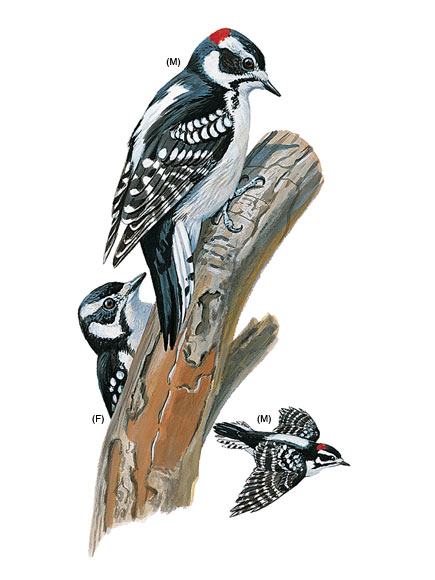
Downy Woodpecker Facts, Pictures, Information

Our tiniest woodpecker, the downy is also among our most wide-spread and well known species; it is a confiding chicken that often goes to chicken feeders. In all aspects it indicates a little edition of the furry woodpecker, both different types of from our other types by the wide bright red stripe down the back. Poly­typic. Duration 6" (17 cm).

Identification The little dimension and often acrobatic looking on little offices and branches are unique, and the plumage design can be puzzled only with the furry. Has hybridized with the Nuttall’s. Adult: dark-colored title, auricular and malar; spine, scapulars and rump dark-colored, but a wide bright red stripe expands down the middle of the back. Underparts unblemished bright (to gray strong in some populations). External longest tail down bright with restricted dark-colored spotting; diverse bright distinguishing on the upperwing coverts and unless on the remiges. Using its has a little red nuchal spot, missing in the women. Juvenile: as in other pied woodpeckers, both genders have a light red spot in the middle of the title, more substantial in male.

Geographic Difference The 7 subspecies change mainly in dimension (northern wildlife usually larger), underpart color (white to grey tinged), quantity of dark-colored in rectrices, and quantity of bright distinguishing in wings. Southeastern wildlife are lesser and a little bit grayer below than boreal and china wildlife. Hawaiian seacoast wildlife have decreased bright distinguishing on the side coverts and secondaries; such bright distinguishing is most highly developed in wildlife china of the Rockies. Birds of the Hawaiian North west are tinged grey on the back and gray-buff below.

Similar Species Nearly similar in patterning to the furry woodpecker. The downy is much lesser, with a short expenses (much decreased than head); outer longest tail down usually present dark-colored areas (but these can be missing, and pitch-dark Hairy subspecies may present a few spots). Pale nose tuft of the downy is relatively bigger than in the furry. The furry reveals a bigger pitching wedge of dark-colored from the back of the malar red stripe onto the chest. Note variations in calls.

Voice Call: pik contact is higher and much smoother than hairy’s razor-sharp, calling look. Generally gives a unique high, a little bit climbing down and raising whinny, kee-kee-kee-kee. Drum: a smooth throw, a little bit decreased than that of hairy; about 17 sounds a second, with drum long lasting 0.8–1.5 mere a few moments.

Status and Submission Common; unusual in south boreal parts. Year-round: person in a variety of deciduous jungles and, more sparsely, in coniferous forests; also found in parks, backyards, and orchards, even in city parts. Missing from most of the lowlands of the leave Free airline. Dispersal: this types is not migratory, but some individuals can spread long ranges. Recreational in lower Az, King Charlotte now Region.

Population Generally constant or raising, but some diminishes have been mentioned in the South.

Dark-Eyed Junco Facts, Pictures, Information

Dark-eyed juncos are exclusive sparrows that home on or near the earth in jungles. In winter season, they generally type flocks and often affiliate with other types, such as cracking sparrows, wood and hand warblers (in the southeastern U. s. Declares.), and bluebirds. When disrupted the complete head instantly travels up to a shrub, usually perching in the start and phoning in frustration at the attack. Polytypic. Duration 6.3" (16 cm).

Identification A pretty toned sparrow with a long notched longest tail and a small pinkish or horn-colored expenses (bicolored in dorsalis). Two popular shiny external longest tail down in most subspecies; 3 outer­most in the “white-winged.” Most subspecies have a grey or darkish go and chest greatly set off from a shiny waist. Otherwise extremely diverse. Male: generally dark with clearer marks. Female: generally browner with more indistinct marks. Juvenile: intensely streaked, often with a know of  mature design.

Geographic Difference The 12 subspecies show noted variation and slip into 5 major groups: “white-winged” (1 ssp.), “Slate-colored” (2 simple ssp., plus cismontanus), “Oregon” (5 simple ssp.), “pink-sided” (1 ssp.), and “gray-headed” (2 exclusive ssp.). The categories have at times been regarded individual types. The “white-winged” junco is the most local, reproduction only in the Dark-colored Hillsides location and wintering along the southern side of the Rockies; it is recreational to random in american Tx, Az, and lower California. The “slate-colored” is the most wide-spread and the only type discovered consistently in the China. It types throughout the species’ range east of the Rockies and in the southern region; it winter weather seasons mainly in the China and is unusual to unusual in the Western side. The “Oregon” junco types in the Western side Seacoast states south to lower Ak and east to middle The state of nevada and american Montana; it winter weather seasons throughout the Western side and Excellent Flatlands and is recreational to the China. The “pink-sided” types in the southern Rockies, primarily based on Yellowstone and such as southern Ut to most southern Alberta and Saskat­chewan; it winter weather seasons in the lower Rockies, Free airline, and american Excellent Flatlands, seldom to the Western side Seacoast, and is random to the China. The “gray-headed” is the subspecies of the lower Rockies, reproduction through much of The state of nevada, Ut, and Co southern to middle Az and american Texas; it winter weather seasons in the southwest and lower Rockies states and is unusual to the Western side Seacoast and random to the China.

The exclusive “white-winged junco,” aikeni, is mostly light grey above, usually with 2 toned shiny side bars; it is also bigger, with more shiny on its longest tail. It is most just like the “Slate-colored” (which can seldom have small wingbars) but is bigger and paler, with distinct blackish lores and more substantial shiny in the longest tail. The using its “slate-colored junco” has a shiny waist distinct greatly with a black grey cover and upperparts, usually with very little comparison between the cover and back; immatures can have some darkish rinse on the rear and title. In the women, the amount of darkish on the go and at the middle of the rear varies; it’s more substantial in immatures. The “slate-colored junco” consists of 2 subspecies: the wide-spread nominate and the bigger, bluer-billed carolinensis, which is person in the Appalachians from California to southern Atlanta. An additional subspecies, cismontanus, is often arranged with the “slate-colored.” It types from the Yukon to middle English The philipines and Alberta and may winter weather throughout the West; it is recreational to the China. Cismontanus is advanced between the “slate-colored” and the “Oregon,” with men displaying a blackish cover that differences with a usually gray rear (occasionally with some brown). Women and immatures are very just like the “Oregon” juncos, but are less definitely hooded. The using its “Oregon” junco has a slaty to blackish cover, distinct greatly with its rufous-brown to buffy-brown rear and sides; the women has duller cover coloring. Of the 5 “Oregon” subspecies, the more southerly subspecies are paler. The “pink-sided” junco, mearnsi, has wide, shiny pinkish sugar-cinnamon factors, a blue-gray cover, a badly identified crimson darkish rear and wings that do not comparison considerably with the flanks, and blackish lores. Women duller, but maintain primary pattern; they can appear to be “Oregon” females carefully. In the “gray-headed” junco, the light grey go and black lores appear to be the go design of the “pink-sided,” but the flanks are grey rather than pinkish, and the rear is noted by a very well-defined spot of crimson hue that does not increase to the wings and that differences greatly with the rest of the body. A exclusive subspecies, dorsalis, is sometimes known as the “red-backed” junco and is person from northwestern Az through New South america to the Guadalupe Mountain ranges of american Tx. It deviates from the more wide-spread, migratory, northern reproduction caniceps in having an even paler neck and a bigger, bicolored expenses that is black above and bluish below. Intergrades between some subspecies are consistent. Typical intergrades are: “pink-sided” x “oregon” and “pink-sided” x “gray-headed.” Cis­mon­tanus may be a wide intergrade inhabitants of “Ore­gon” x “slate-colored” juncos. Recognition to subspecies team thus needs warning to get rid of the opportunity of an intergrade; for intergrades, look for advanced characteristics: For example, a dark, more distinct cover on a “pink-sided” indicates the effect of “Oregon” genes; decreased lilac factors and a well-defined crimson rear on a “pink-sided” indicate “gray-headed” parentage.

Similar Species Yellow-eyed junco.

Voice Audio and calls among the subspecies are generally simi­lar, but songs and calls of the “gray-headed” dorsalis are more effective of the yellow-eyed junco. Call: razor-sharp dit. Trip note: a fast twittering. Song: a musical technology trill on 1 pitch; often observed in winter weather.

Status and Submission Typical. Breeds southern to southern Baja California; winter weather seasons southern to southern South america. Breeding: types in coniferous or combined jungles. Winter: discovered in a a wide range of environments, the dark-eyed junco tends to prevent places of more dense brush; it especially prefers bird feeders, parks, and start woodlands without an understory. Migration: withdraws from wintering places during May, generally early–mid-April. Fall arrivals first appear in overdue July, peaking in overdue July. Vagrant: lower California and The european union.

Population Constant.

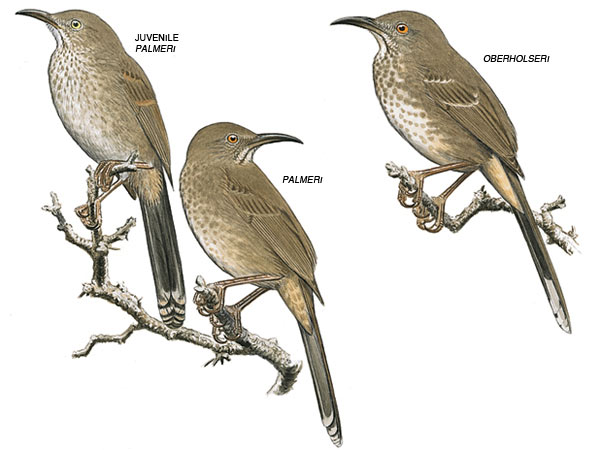
Curve-Billed Thrasher Facts, Pictures, Information

The curve-billed thrasher—the typical thrasher of the wealthy, cactus-laden Sonoran Desert—can be very obvious, relaxing up on saguaro or cholla cactuses, making its existence known by its noisy 2- or 3-note contact, whit-wheet. It often creates its home within a cholla exotic. Its looking conduct is just like other leave thrashers, searching for creatures in foliage cover or in gaps in the earth, and it sometimes nourishes on fruits or cactuses fruit. Polytypic. Duration 11" (28 cm).

Identification Genders identical. A largish, light darkish thrasher with consistent darkish upperparts and game, somewhat unclear areas on the underparts. Wings have recognizable white side cafes, particularly in southern wildlife. Longest tail has light guidelines, the level of which will depend on subspecies. Expenses is relatively substantial, black, and definitely decurved. Eye is definitely orange-­yellow. Juvenile: lately fledged wildlife have less specific distinguishing than do people, and their charges are considerably reduced and less decurved.

Geographic Difference Subspecies oberholseri (southeastern Az to southern Texas) has better distinguishing below, more specific bright side cafes, and more substantial bright guidelines to the tail down. American wildlife, palmeri, have less specific breast areas and less obvious bright guidelines to the tail down. Calls between the subspecies are a little bit different.

Similar Types Parents distinctive; please take be aware different environment and calls in contrast to the Bendire’s thrasher. Child curve-billed easily puzzled with the Bendire’s (especially used adult Bendire’s and juvenile curve-billed, which may overlap during overdue early spring and early summer in lower Arizona). Very identical bill length and decurviture, but juvenile curve-billed generally reveals some light material at the gape on the shortish bill. The Bendire’s usually maintains at least some fine black streaking on the underparts, which is missing on juvenile curve-billed.

Voice Call: very unique noisy whit-wheet or whit-wheet-whit. Song: substantial and complex, made up of low trills and warbles, hardly ever saying words. Quite different from Bendire’s, but possibly puzzled with audio of the crissal or the Le Conte’s thrasher.

Status and Submission Common person in leave environments, particularly those full of cholla and other cactuses. Particu­larly typical in suv neighbor­hoods that maintain natural leave crops. Also found in mesquite-dominated leave clears. Vagrant: extralimital information mostly associated with palmeri from Florida, The state of nevada, Florida, and various declares in the Area.

Population Although typical, the species is suffering from environment loss through city progression and improved farming in lower Az and lower Tx.

Cooper’s Hawk Facts, Pictures, Information

The “chicken hawk” of northeastern The u. s. states, this medium-sized accipiter is a typical vision at home chicken bird feeders across the nation, swooping in to nab an unwary dove or jay. Women are bigger and heavy than men, juveniles change from people. Monotypic. Duration 14–20" (36–51 cm); wingspan 29–37" (74–94cm).

Identification The long-tail is completed at the tip, also the relatively shorter wings and flat-topped go are good area represents. Eye is close to the beak. Title combines with temple and expenses in a sleek line. Adult: blue-gray upperparts, the crown is dark and differences with the brighter nape and buffy cheekbones, giving the look of sporting a “beret.” Eye color is red to red. Undersides with rufous unless, undertail is bright. Juvenile: darkish above, with rufous sides and bright areas on upperwing coverts. Longest tail extensive, with immediately companies and wide, bright tip that sports down by may. Head usually buffy, face light yellow-colored. Undersides are bright with lean darkish lines, bright undertail. Flight: wings generally kept immediately out from body, go, and fretboard predicting forward. This along with tail length make a “flying cross” look. Short, quick wingbeats change with shorter slides.

Geographic Difference American numbers tracking more open nation are lesser, with more time wings, reduced feet than lower wildlife. Plumages are as well.

Similar Types South goshawk is usually bigger, heavy showing, and has relatively reduced tail and more time wings. Sharp-shinned hawk is lesser and has a block tail.

Voice A low keh-keh-keh uttered around home, sometimes resembled by jays.

Status and Submission Wide-spread through Usa Declares and lower South america, more generally seen in and surrounding suburbs, probably due to reforestation in the China. Breeding: nests in a variety of woodlands types, preying on small- to medium-size wildlife and little animals, tracking from perches under the cover. Migration: in­creasing numbers at lower hawk-watches probably due to better recognition skills. Winter: juveniles winter weather further northern than adults; lower wildlife move to the lower states, western wildlife to South usa.

Population Common and constant in the Western side, raising in the China.

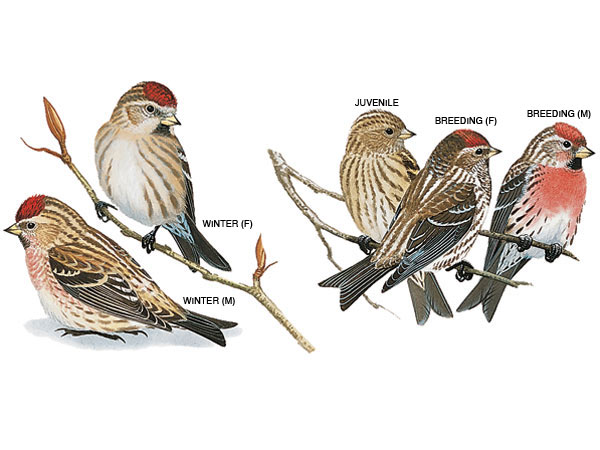
Common Redpoll Facts, Pictures, Information

Typical and hoary redpolls are 2 carefully related finches of the boreal woodlands and Arctic tundra detail. The normal is the more wide-spread types of the 2, usually inhabiting subarctic woodlands during summer time months and often visiting seeds bird feeders in lower United states and southern U. s. Declares during wintertime months season, when they form huge flocks. People have feature red cap or “poll.” Polytypic. Length 5.3" (13 cm).

Identification The normal is usually a relatively little, streaked finch with a little, indicated bill; short, greatly notched tail; 2 shiny side bars; dark-colored chin; red cap; and various volumes of red beneath the. Reproduction male: the cap is shiny red. The upperparts are darkish with specific streaking. The shiny wonderful red of the neck and chest expands onto the cheekbones. The shiny flanks and undertail coverts have fine dark-colored streaking; the paler rump has unique streaking. Reproduction female: she does not have the red chest of the using its and has diverse volumes of streaking beneath the, usually restricted to factors. Winter male: duller. Buffy rinse on factors and rump. Winter female: also buffier on factors. Immature: first-year wildlife appear to be an mature women, but they are usually buffier. Juvenile: darkish and streaked, it gains the red cap in the overdue summer time molt.

Geographic Difference Two breeding subspecies in South The united states. The small-billed and lesser flammea has less rough streaking and is wide-spread across United states to Alaska; the large-billed and larger rostrata has rougher streaking beneath the and is discovered on Baffin Region and Greenland. Both overlap during wintertime season, but the clinal variation makes recognition difficult.

Similar Species Great care is needed to individual the common from the very similar-looking hoary. The breeding mature using its hoary is a very freezing shiny above, and shiny below with a very light lilac impact on chest. Women and immatures are much more difficult; depend on the variations in expenses style, the existence or lack of streaking on the rump, the quality of the streaking on the flanks and undertail coverts, and to a cheaper degree, location. The child common can appear to be a child wood siskin, but it does not have yellow-colored in the side. The level of interbreeding between common and hoary redpolls is mysterious.

Voice Call: when located, gives a sweee-eet; trip contact a dry rattling jid-jid-jid-jid. Song: a extended sequence of trills and twittering rattles.

Status and Submission Typical. breeding: Seen in the subarctic jungles and tundra across southern United states and much of Ak. The rostrata types in tundra detail, where it overlaps with the hoary. Winter: types huge flocks. Irruptive migrant southern through much of United states to southern U. s. Declares Generally winter seasons further southern than hoary. Vagrant: recreational or random anywhere in lower U. s. Declares.